Quick answer: The best Christmas wallpaper ideas start with one feature wall and a pattern you can live with after December 25. Choose peel-and-stick tartan, gingham, or winter chinoiserie for a clean seasonal swap. Save Santa and gift motifs for small spots, and keep explicit holiday prints off walls you will still see in January.
Holiday wallpaper can make a room feel finished in an afternoon, but a print that only works from Thanksgiving to New Year’s is a lot of effort for a short run. The more useful approach is to treat Christmas wallpaper as a temporary layer when the motif is unmistakably festive, and as a winter or year-round backdrop when the pattern is preppy at its core: tartan, gingham, chinoiserie, or a classic botanical. This guide covers which designs to keep or swap, which materials survive a four-to-six-week hang, and where to put the paper so it helps the room instead of competing with the tree.
Which Christmas Wallpaper Ideas Last After December?
Start with a simple test: would you still like this wall on January 15, with the tree gone and the wreath in a box? If the answer is yes, you can hang a more permanent paper and dress the room with greenery, ribbon, and lights for the season. If the answer is no, use a quality peel-and-stick on one wall or in a small space, and plan to take it down when the decorations come down.
| Keep through winter (or all year) | Swap in January |
|---|---|
| Heritage tartan and plaid in red, forest green, navy, or cream | Santa, reindeer, nutcracker, or gift-wrap scenes |
| Gingham and small checks in holiday colors | Candy canes, typography, or “Merry Christmas” repeats |
| Blue-and-white or muted chinoiserie | Murals of a specific Christmas village or Santa’s workshop |
| Classic holly, pine, or winter botanical repeats | Novelty characters and kids’ motifs you will tire of in a week |
| Quiet stripes, toile, or damask in seasonal palettes | High-contrast paper that only makes sense next to a tree |
This is the real information most Christmas wallpaper ideas skip. A red-and-green tartan still looks like a library or dining room in February. A wall of smiling Santas does not. If you want maximum use from one order, pick a “keep” pattern and let ornaments, a garland, and a tree do the December-specific work.
Preppy Christmas Wallpaper Patterns That Work
Preppy holiday rooms lean on classic pattern and a tight palette, not on novelty prints. The wall should feel like the rest of the house, just dressed for the season.
Tartan and plaid
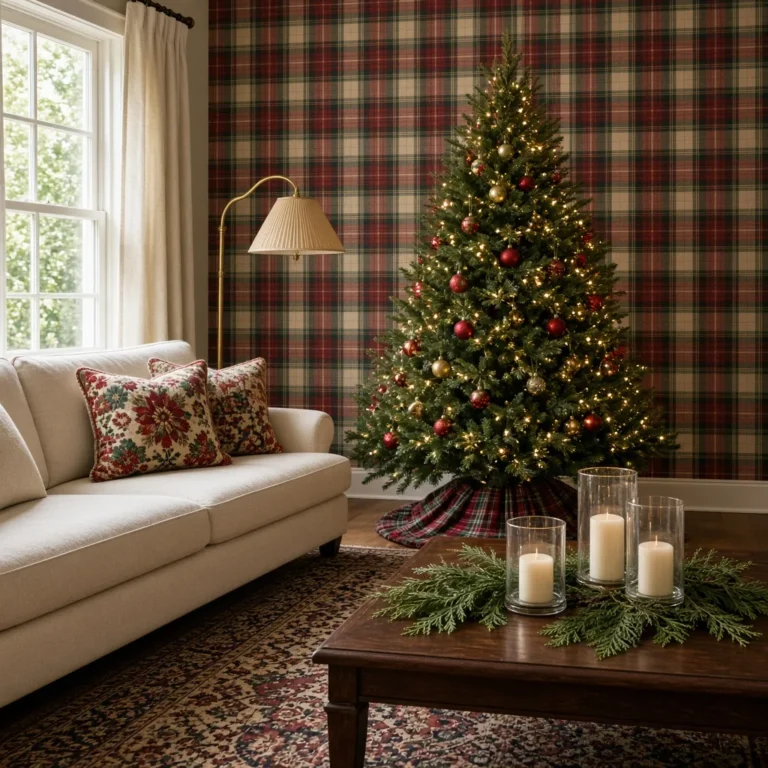
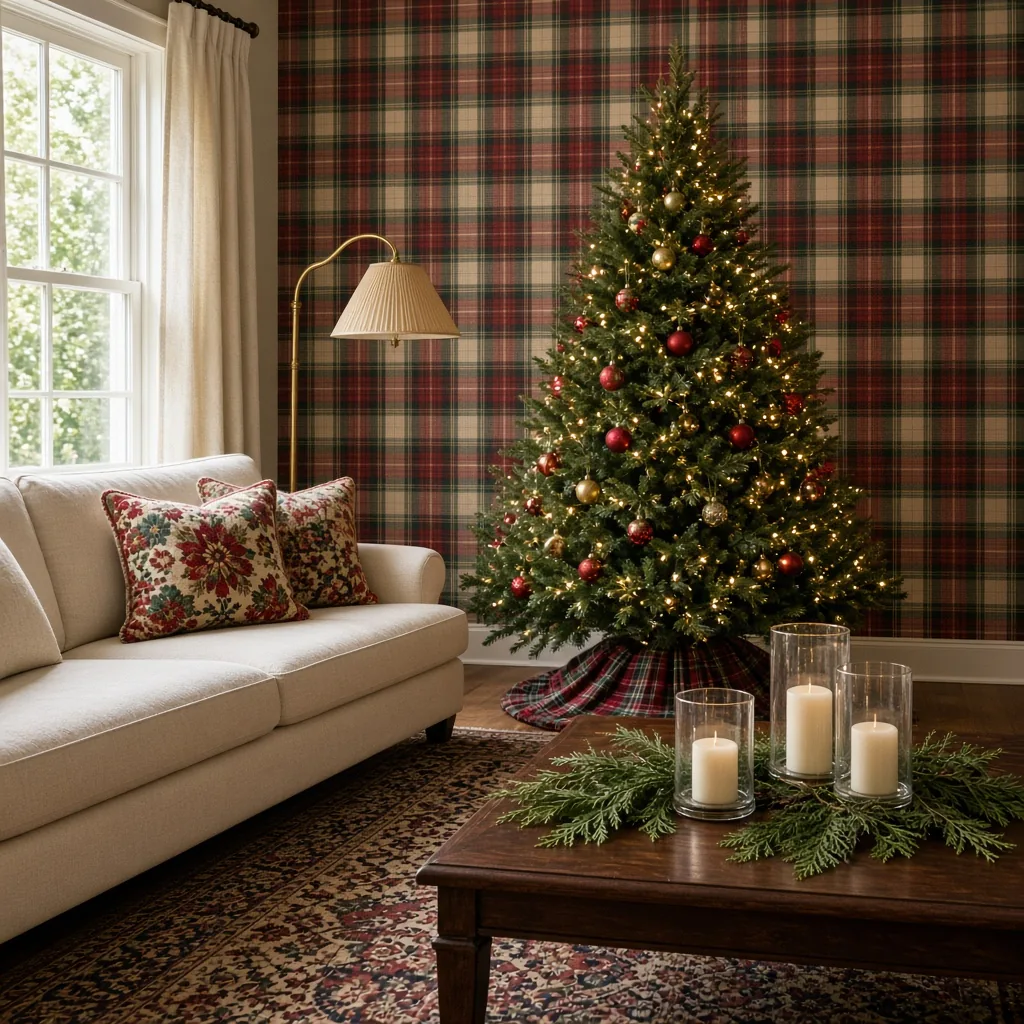
Tartan is the most versatile Christmas wallpaper idea in this style. A traditional red, forest green, and cream plaid behind the tree gives you the holiday color story without writing “Christmas” on the wall. Navy-and-green or black-and-cream versions read even more like year-round preppy pattern. Keep the scale medium so it does not vibrate next to a decorated tree, and use it on one wall, not all four.
Gingham and checks
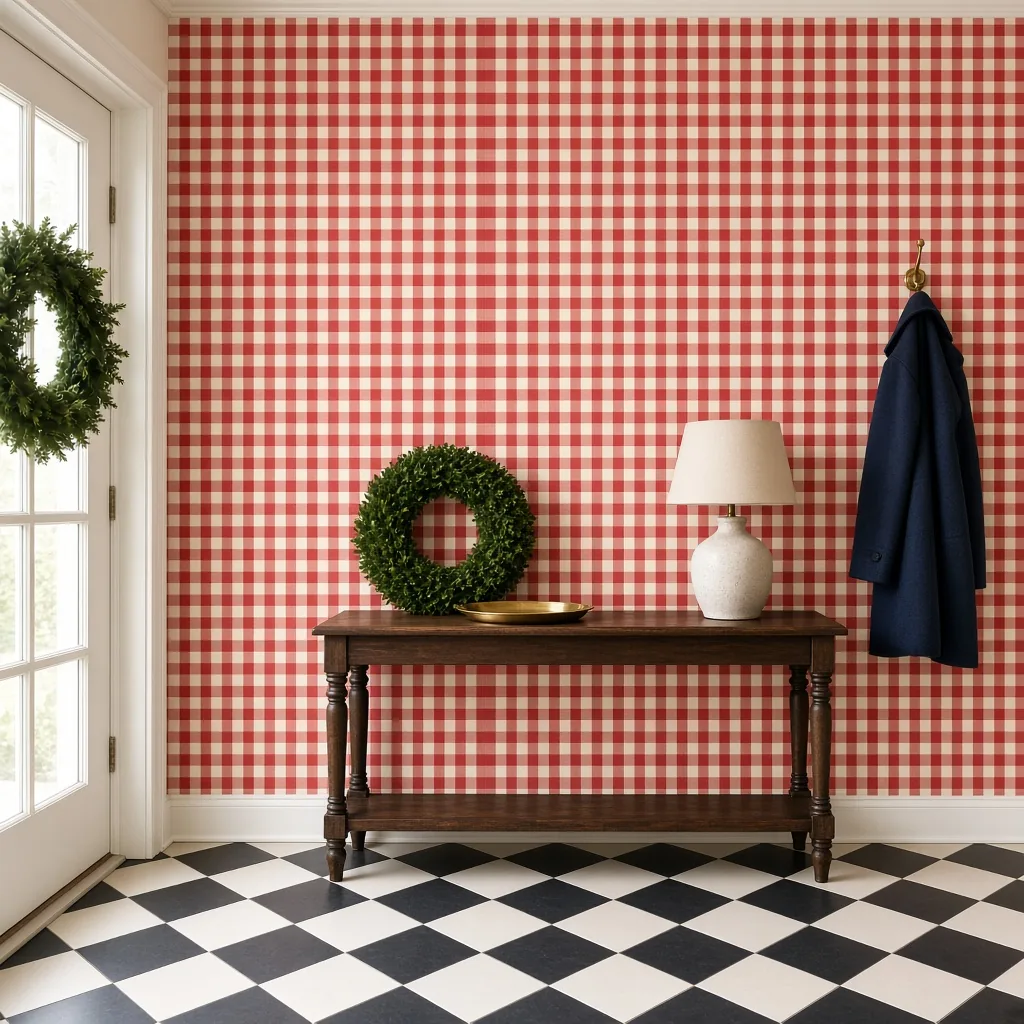
Red-and-cream or hunter-green gingham is cheerful, graphic, and easy to take down. It works especially well in an entry, a breakfast nook, or the back of a bookshelf, where a small repeating check reads in a glance. Because gingham is not tied to one holiday, you can leave a well-chosen check up or swap it for a spring colorway later.
Chinoiserie
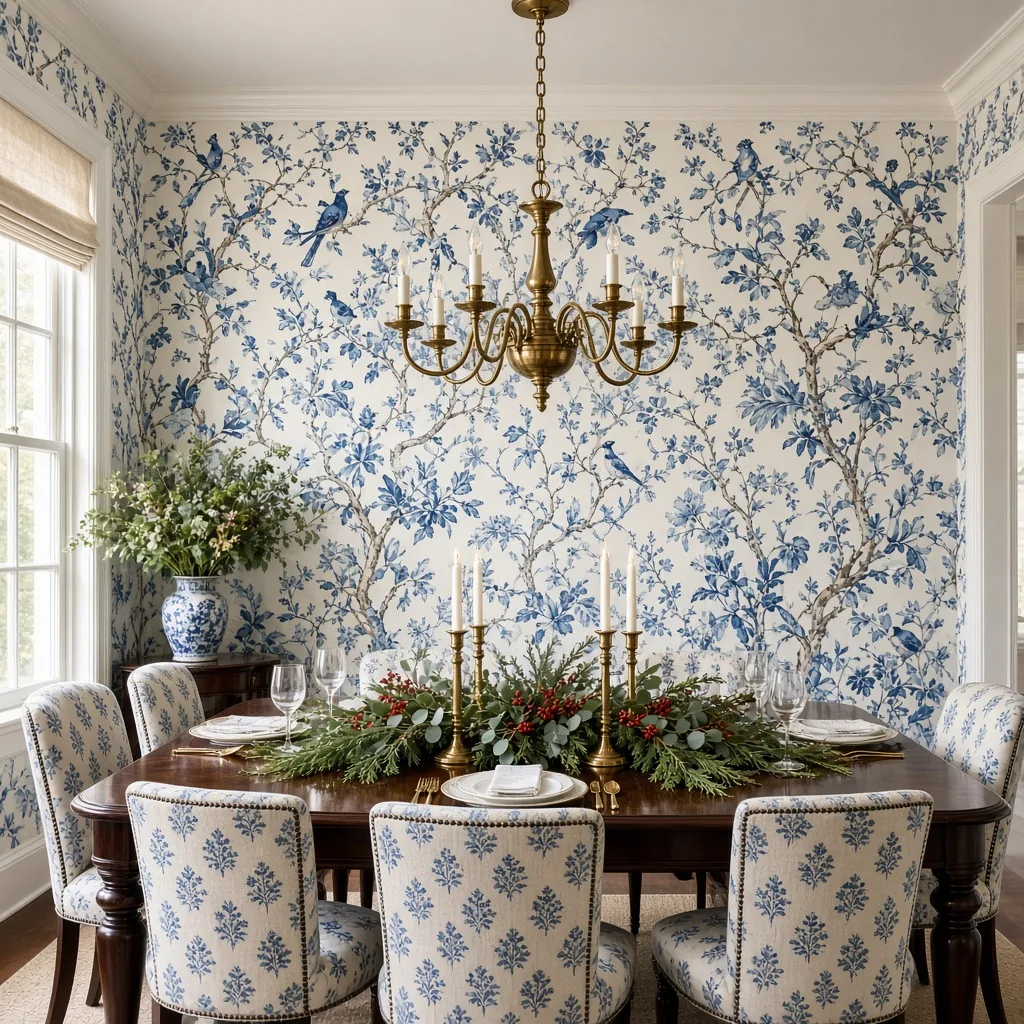
Blue-and-white chinoiserie, or a softer taupe-and-sage version, is the pattern to choose if you want the wall to stay. Birds, branches, and flowers give you a formal backdrop for a holiday table, then look just as right with bare branches or spring flowers. Add cedar, berries, and brass for December; take those away in January and the paper does not suddenly feel out of season.
Holly, pine, and winter botanicals
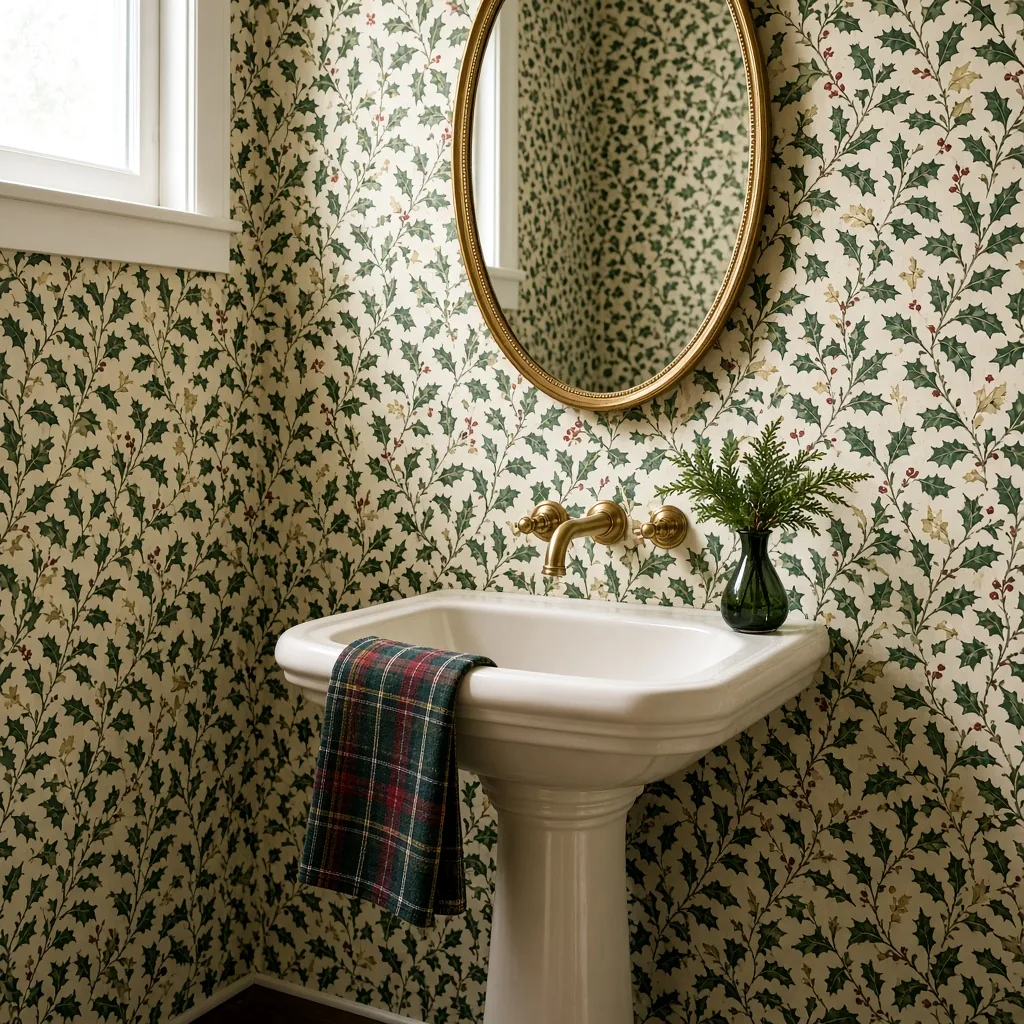
A small-scale holly or pine repeat can go either way. On a cream ground, with classic drawing rather than cartoon berries, it reads as winter and can stay through February, especially in a powder room. If the motif is oversized, glittered, or paired with bows and packages, treat it as a seasonal swap.
What Wallpaper Material Works for a Seasonal Hang?
The material should match how long the paper will stay up and how much wear the wall gets. A four-week holiday installation has different needs than a chinoiserie dining room you plan to keep for years.
| Material | Best for | Watch-outs |
|---|---|---|
| Quality peel-and-stick vinyl or fabric-backed removable paper | Seasonal swaps, rentals, and one-wall holiday features on smooth, fully cured paint | Thin films lift at seams. Fresh paint, heavy texture, and chalky flat finishes fight the adhesive. Most removable papers are not worth trying to reuse next year. |
| Paste-the-wall non-woven, vinyl-coated | Patterns you will keep through winter or year-round, such as chinoiserie or tartan in a dining room | It is a bigger job to hang and to remove. A poor removal can damage paint. |
| Scrubbable solid vinyl or fabric-backed vinyl | Entries, halls, and other busy walls if the pattern will stay | Overkill for a one-month hang, and usually the wrong choice if you need it gone in January with no trace. |
If the wall is in a hallway or entry that already takes a beating, a temporary holiday paper is safer above a chair rail, or on a quieter side wall, than on the exact path of coats and bags. For materials that have to survive daily traffic year-round, use our guide to wallpaper for high-traffic areas and treat any Christmas layer as a removable extra, not a substitute for a durable base.
In a butler’s pantry or kitchen nook, keep even a holiday paper out of the splash zone around the sink and range. The same placement rules in our kitchen wallpaper ideas apply in December: a wipeable vinyl in a dry nook is fine, and paper directly behind a cooktop is not.
Where to Put Christmas Wallpaper, Room by Room
One wall is almost always enough. Papering a whole room in a holiday print is expensive, harder to remove, and usually busier than the tree and garland already in the space.
- Living room: Put a tartan or quiet winter botanical on the wall behind the tree or around the fireplace, not on the wall you face across from the tree. Two focal points fight each other. This is the classic job for a living room accent wall: one finished backdrop, with ornaments and lights doing the rest.
- Entryway: Use a small-scale gingham, stripe, or check that reads in a few seconds. Guests do not linger here, so a clear pattern beats a detailed mural. If the entry is tight and gets scuffed, limit the paper to the wall above a console or wainscoting.
- Dining room: Chinoiserie, toile, or a heritage tartan can stay after the holidays. The table setting and a runner of cedar can carry December.
- Powder room: This is the best place for a bolder holly or botanical print, because the wall area is small and guests already expect a bit of personality. The same “one wall, lighter pattern” advice in our guide to wallpaper for small spaces applies: keep contrast in check so a tiny room does not close in.
- Kids’ rooms: Playful, clearly Christmas motifs belong here only if they are removable. A winter forest or simple star repeat is easier to live with through January than a character mural. If you want a year-round pattern instead, start with our wallpaper ideas for a child’s bedroom.
- Bookshelves, alcoves, and stair landings: A few strips of peel-and-stick in the back of a bookcase or a single alcove give you a holiday moment with very little paper and a simple removal.
Older florals, toile, and damask from our look at vintage wallpaper trends also make strong holiday backdrops. You do not need a Christmas print if the pattern already has history; greenery and ribbon will do the seasonal work.
How to Hang Christmas Wallpaper — and Take It Down in January
Surface prep matters more than the motif. The wall should be clean, dry, smooth, and sound. Fresh paint needs time to cure; many manufacturers ask you to wait about four weeks before hanging peel-and-stick, otherwise the adhesive may fail or pull paint later. Prime bare drywall or chalky flat paint, and skip heavy texture, brick, and popcorn surfaces. The Wallcovering Installers Association’s care and cleaning guidance is a good reminder that dirt, grease, and harsh cleaners shorten the life of any wallcovering, including a temporary one.
For peel-and-stick, test a small piece in a hidden spot first and leave it overnight. Hang from a plumb line, peel the backing a little at a time, and smooth from the center out. Overlap seams slightly if the maker recommends it, rather than forcing a tight butt joint that later gaps. In January, warm the edge gently if needed and pull slowly back along the wall at a low angle, not straight out toward you.
Be careful once the tree and candles go up. The U.S. Fire Administration’s holiday fire safety guidance recommends keeping decorations away from heat sources and using flameless candles when you can. The National Fire Protection Association’s winter holiday safety page advises keeping trees at least three feet from heat and turning lights off when you leave or go to bed. Inspect light sets before you hang them; the U.S. Consumer Product Safety Commission holiday safety guidance covers damaged cords and indoor-versus-outdoor ratings. Do not staple lights through wallpaper, and keep open flames well away from papered walls.
If you are hanging a keep-all-year chinoiserie or tartan instead of a temporary print, take the time to order samples and live with them in the room’s actual light. A seasonal swap can be impulsive. A wall you will still have at Easter should not be.
Christmas Wallpaper FAQ
Can I put Christmas wallpaper up in a rental?
Yes, if you use a quality peel-and-stick paper on a smooth, fully cured painted wall and test a small area first. Check your lease, because some agreements restrict any wallcovering. Removal should be slow and low-angle so the paint stays put.
Can I reuse peel-and-stick Christmas wallpaper next year?
Usually not. Once you peel it off, the adhesive rarely grips evenly a second time, and the sheets often stretch or tear. Treat removable holiday paper as a one-season product, or choose a winter pattern you are willing to leave up longer so you get more use from the same hang.
Does Christmas wallpaper work on textured walls?
Light orange-peel texture can work with a thicker vinyl, but heavy texture, knockdown, and popcorn will show through and weaken the bond. For a short seasonal hang, it is better to paper a smooth wall, a door panel, or the back of a bookcase than to force peel-and-stick onto a rough surface.
What is the best Christmas wallpaper for a small room?
A light, small-scale repeating pattern, such as gingham, a fine botanical, or a narrow stripe. In a powder room you can go a little bolder because the space is already short on wall. Avoid dark, large murals in tight rooms, which tend to close the walls in.
Should I choose a mural or a repeating Christmas pattern?
Choose a mural only if you want one wall to be the scene, usually behind the tree, and you are prepared to take it down in January. Choose a repeating pattern if you want the room to feel festive without one dominant image, or if the design might stay through winter.
Will peel-and-stick wallpaper damage paint?
It can, if the paint was never primed, is a chalky flat, or has not fully cured. On a sound, primed eggshell or satin wall, quality removable paper usually lifts cleanly when you pull slowly. Always test a hidden patch first.
How long can holiday wallpaper stay up?
A clearly Christmas motif looks right from late November through early January. A tartan, chinoiserie, or winter botanical can stay through the season and beyond. Let the pattern, not the calendar, decide.
Is plaid wallpaper only for Christmas?
No. Heritage tartan and plaid are traditional year-round patterns in preppy interiors. Red-and-green versions feel especially seasonal in December, but they still read as classic pattern once the tree is gone, which is why they are a strong “keep” choice.
Start with one wall, a pattern that passes the January test, and a material that matches how long it will stay. Order a sample, hang it in the room’s real light, and let the tree and greenery do the rest. For more placement help, browse our accent wall wallpaper ideas and high-traffic wallpaper guide.