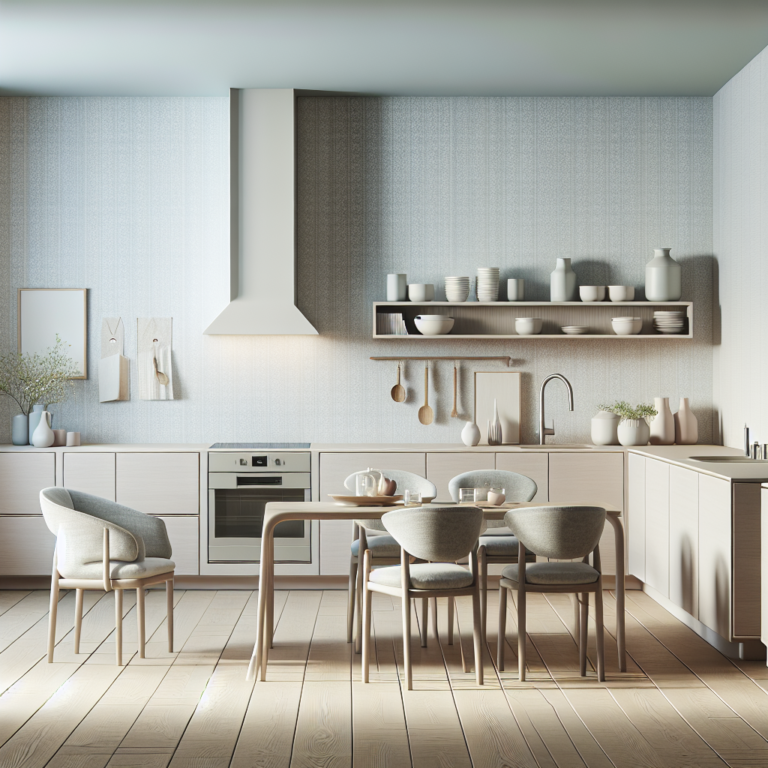
A kitchen can take wallpaper if you put the right material in the right place. Grease, steam, and daily traffic undo a pretty paper faster than almost any other room. Stay out of the worst splash zones, and choose a surface you can actually clean.
Where Kitchen Wallpaper Works (and Where It Doesn’t)
Breakfast nooks and banquette walls are ideal. They get used every day but rarely take oil or steam, so you can commit to stripes, gingham, or a soft botanical. The same is true of a dining wall in an eat-in kitchen, or the wall you face from the island.
Pantries, butler’s pantries, and coffee bars are almost made for wallpaper: the walls stay dry and the space is small enough that a pattern feels intentional. The back of an island or peninsula — the side facing the living or dining room — reads as a finished panel, not a work surface. Upper walls above a tile or stone backsplash also work if a chair rail, a cap of tile, or a painted strip keeps the paper from meeting the cooktop.
Skip wallpaper directly behind an open gas burner or a range with no real backsplash. Open flame, radiant heat, and airborne grease are a bad mix for most papers, including vinyl. Leave the unsealed zone around a frequently used sink alone too. Constant splashing works water into seams, and once the edges lift, they rarely sit down again. If you want pattern near the stove or sink, stop the wallpaper at a tile backsplash and use a sealed surface in the splash zone itself.

Materials That Can Handle a Kitchen
Not every “washable” label means the same thing. For a kitchen, look at how the paper is built, not just how it photographs.
Solid-sheet scrubbable vinyl is the most durable option for a busy kitchen wall. The pattern sits on a continuous vinyl surface, so you can wipe it with a damp cloth and mild soap without the ink rubbing off, and it handles grease better than paper or uncoated non-woven. Cheaper solid vinyl can look plastic in raking light, so spend time with samples if you want a convincing stone or grasscloth look.
Vinyl-coated non-woven is the middle path most homeowners actually want. You paste the wall, not the paper, which makes hanging cleaner. The coating is wipeable without the stiff shine of bargain vinyl. It is a strong choice for stone-look textures, botanicals, and preppy stripes in a nook or pantry, provided you keep it off the wettest splash zones.
Thick, removable peel-and-stick is the renter’s option, and quality varies wildly. A thin, stretchy film will lift at the seams the first time the kitchen gets steamy. Look for a heavier vinyl or fabric-backed removable paper, and walls that are smooth, clean, and painted with a fully cured eggshell or satin finish. Fresh paint, heavy texture, or chalky flat paint will fight the adhesive, and removal can still take paint with it if the wall was never primed. Keep even a good peel-and-stick away from the range; it is less heat-tolerant than a pasted vinyl.
For a broader look at durability, see our guide to wallpaper for high-traffic areas — kitchens sit at the hard end of that spectrum.

Styles That Earn Their Place
Concrete and stone-look textures are the current workhorses. A soft gray concrete, a limestone wash, or a finely mottled plaster effect adds depth without competing with cabinets. If you like more tactile walls, we go deeper in our guide to textured wallpaper.
Marble-veined papers offer a luxury finish without the cost or seams of slab. They work especially well on a single statement wall — the back of an island, a coffee-bar niche, or the wall behind open shelves. Match the scale to any real stone in the room, and see our guide to luxurious wallpaper designs.
Classic preppy stripes and gingham belong in breakfast nooks and pantry interiors. Narrow ticking stripes, a soft navy or forest green stripe on cream, or a small-scale gingham will still look considered in five years, and vertical stripes can make a small nook feel taller. See our monochrome wallpaper ideas for more on how a restrained, single-color stripe behaves in a room.
Grasscloth-look vinyl and soft botanicals fill the gap between texture and pattern. Real grasscloth is a poor kitchen material: it stains, absorbs steam, and cannot be wiped. A good vinyl version gives you the same woven warmth and can actually be cleaned. Soft botanicals — watercolor leaves or a quiet vine, not a giant tropical print — belong in nooks, pantries, and dining walls, not the splash zone.

Prep, Hanging, and Everyday Cleaning
Kitchen walls almost always have a film of grease on them, even when they look clean. Wash them with a dedicated degreaser or a TSP substitute, rinse, and let them dry fully before you prime or hang anything. Fill holes, sand ridges, and prime repaired spots. Scuff-sand and prime glossy paint, or the paper may let go at the seams.
Strike a plumb line for the first strip and work from there. Pattern-match at eye level, not at the ceiling, so the most visible run looks tight. Keep seams out of the highest-steam path if you can.
Once the paper is up, wipe spills promptly with a soft cloth and a drop of mild dish soap. Avoid abrasive pads and soaked sponges, which can burnish vinyl or drive water under a seam. If a seam starts to lift, a little seam adhesive, pressed with a clean roller, will usually catch it.
Kitchen Wallpaper FAQ
Can I put wallpaper behind a stove?
Not directly behind an open gas burner or an unprotected cooktop. Heat, grease, and occasional flare-ups will stain or lift almost any paper. Run tile, metal, or another sealed backsplash through the splash and heat zone, then start the wallpaper above or beside that surface.
Why does kitchen wallpaper peel when the room gets steamy?
Steam works into poorly sealed seams and weak adhesive, especially on unprimed or glossy walls and on thin peel-and-stick film. Improve ventilation, keep paper out of the wettest zones, and use a scrubbable vinyl or vinyl-coated non-woven over a proper wall primer.
Will peel-and-stick wallpaper work in a rental kitchen?
Yes, if you buy a thick, high-quality removable vinyl, prep the walls carefully, and stay away from the range and sink splash. Thin, bargain films tend to curl at the seams. Check your lease, test a small patch first, and know that even “removable” paper can take paint off if the wall was never primed.